

Introduction: Why Healing Matters Before Dating Again
We’ve all heard the old, tired advice: “The best way to get over someone is to get under someone else” or “Just put yourself back out there!” But if you’ve ever jumped back into the dating world in your 30s, 40s, or beyond before your heart was truly ready, you already know how hollow that advice feels once the noise fades.
When a long relationship ends—whether it was a quiet fading of affection, a sudden breakup, or a painful divorce—it leaves a deep footprint on your life. It subtly shifts how you view your worth, how you process trust, and how you navigate your quietest days. In this stage of life, dating isn’t just about finding weekend plans or chasing fleeting butterflies. It’s about protecting your peace, opening your life to another person, and building something sustainable.
Attempting to build a new connection without taking time to heal your past is like painting over cracked plaster. The walls might look fresh for a week, but the moment a light breeze blows through, the damage surfaces again.
What Does “Healing Before Dating” Actually Mean?
Healing doesn’t mean you must be completely flawless, perfectly balanced, or immune to bad days before downloading an app or saying yes to coffee.
Healing simply means:
- You no longer use another person as an emotional band-aid for discomfort or quiet evenings.
- You have stopped expecting a new partner to heal the wounds left by an old one.
- You step out into the world from a place of personal wholeness, rather than silent desperation.
When you take the time to pause and heal, you break the cycle of repeating past patterns. You stop attracting the same pain in a different outfit, and you begin inviting genuine peace back into your life.
Sign 1: You No Longer Compare Everyone to Your Ex
When a long chapter of your life closes, your former partner often becomes an invisible filter through which you view every new face. If you find yourself constantly measuring a new acquaintance against your past—either holding them to an unrealistic standard or bracing for them to make the exact same mistakes—you are still carrying the weight of yesterday into today.

The Two Filters We Fall Into
- The Phantom Pedestal: You go on a date and immediately think, “They aren’t as witty as my ex,” or “They don’t dress the way my ex used to.” You forget the reasons the relationship ended and focus only on the highlighted memories, making it impossible for anyone new to measure up.
- The Guarded Shield: You expect history to repeat itself. If your ex was a poor communicator, a ten-minute delay in a text message from someone new sends your mind spinning into worry or frustration. You react to the old ghost, not the real person in front of you.
How You Know You’ve Reached This Stage
- You see new people as blank slates: You evaluate someone based on their individual character, values, and actions today—not how they compare to a previous chapter.
- The past holds neutrality, not charge: Thinking about your ex no longer brings a surge of bitterness, deep longing, or anger. They are simply part of your story, not your current reality.
Frequently Asked Question: Is it normal to still think about an ex occasionally when starting to date again?
Yes, completely. Thoughts and memories are natural human experiences. The shift happens in the emotional reaction. A fleeting thought causes no ripple; a deep emotional charge means your heart is still actively working through something that needs more time and care.
Sign 2: You’re Happy on Your Own
One of the greatest gifts of taking a step back from romance is discovering that your own company is actually wonderful. When you can sit with yourself on a quiet Sunday afternoon without feeling an overwhelming urge to escape the stillness, you have unlocked true emotional freedom.
Being happy on your own doesn’t mean you want to live as a hermit forever or that you’ve given up on love. It simply means your happiness is no longer dependent on someone else’s presence in your living room.

The Shift from Need to Want
When you date out of need, you settle quickly. You overlook red flags, ignore core incompatibilities, and dim your own light just to keep someone close. But when you date out of want, everything changes.
- Your standards naturally rise: You no longer take just any invitation that comes along. You evaluate whether adding this person to your life enhances the peace you’ve built.
- Solitude becomes a sanctuary:
You learn to love your routines, your space, your hobbies, and your own voice.
- You bring a full cup to the table:
You are no longer asking someone to enter your life to save you from boredom or internal emptiness. You are inviting them to share in the joy you already possess.
Frequently Asked Question: Does being comfortable alone mean I’m becoming too set in my ways?
There is a sweet spot between healthy self-reliance and rigid isolation. Healthy self-reliance means you enjoy your life, but your heart remains open and flexible enough to make room for another person’s habits, quirks, and world.
Sign 3: You Trust Again, Even If Cautiously
Betrayal, heartbreak, and unexpected breakups leave scars on our ability to trust. It is completely natural to build high walls around your heart after being hurt. But if you walk into the dating world with armor so thick that no one can reach you, you block love out at the same time you keep pain away. Relationship experts at The Gottman Institute emphasize that building trust and emotional attunement requires stepping out of defensiveness and creating space for emotional safety.
Healing doesn’t mean trusting blindly or handing your heart to the first person who compliments you. It means learning the difference between blind trust and earned, cautious trust.

Rebuilding Your Inner Compass
- Trusting yourself first: The biggest fear after heartbreak often isn’t “Can I trust them?”—it’s “Can I trust myself not to pick the wrong person again?” When you work through healing, you realize you now have the tools, boundaries, and wisdom to protect yourself if things go wrong.
- Extending small bridges: You allow new people to earn your trust gradually through consistent actions over time, rather than demanding they prove themselves guilty until proven innocent.
- Recognizing safety: You start to feel comfortable with stability, honesty, and calm energy, rather than mistaking anxiety and emotional volatility for passion.
Sign 4: You’re Not Dating to Fill Loneliness
Loneliness is a quiet, heavy feeling. It can creep in late at night, on holidays, or during those quiet moments when you wish you had someone to text about a funny thing that happened at work.“Research highlighted in Psychology Today explains how breakups affect the nervous system and emotional withdrawal, showing why rushing into a new relationship can often delay genuine healing.”
But using another human being as a patch for temporary loneliness is unfair to both them and you.
Dating out of loneliness is like grocery shopping when you’re starving—you end up picking up things that aren’t good for you simply because you want instant satisfaction.

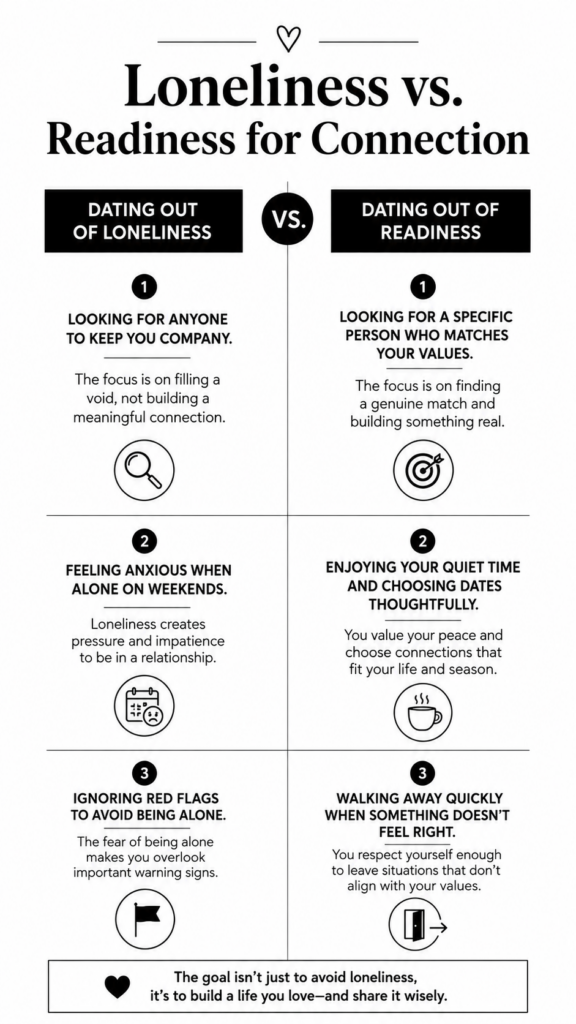
When you reach a place where you can hold your own hand through lonely evenings, you become immune to toxic attention. You stop letting just anyone into your sacred inner world.
Sign 5: You’ve Forgiven Yourself and Learned from the Past
Heartbreak almost always leaves behind a trail of self-blame. We lie awake replay decisions from months or years ago: “Why didn’t I speak up sooner?” “Why did I stay so long?” “How did I miss those obvious warning signs?”
True emotional readiness happens when you put down the heavy stone of self-judgment. You come to realize that you made decisions in the past using the level of awareness, emotional maturity, and survival skills you possessed back then.

Turning Regret into Personal Wisdom
Forgiving yourself doesn’t mean pretending past mistakes never happened. It means transforming those painful lessons into quiet wisdom for your future:
- Owning your part without self-flagellation: Recognizing where your own boundaries were weak without labeling yourself as foolish or inadequate.
- Releasing the narrative of wasted time: Accepting that no relationship is ever truly a waste of time if it taught you who you are, what you need, and what you will never tolerate again.
- Making peace with your journey: Understanding that your timeline is entirely your own. You haven’t lost years; you’ve gained the exact life experience needed to build a mature, lasting love.
Sign 6: Your Emotional Triggers Are Easier to Manage
We all carry emotional triggers—sensitive spots created by past hurts, rejections, or broken promises. In a fresh relationship, an unhealed trigger can cause you to react disproportionately to simple situations.
For instance, if an ex used distance as a weapon, a new date taking a few hours to reply to a message might send you into a spiral of anxiety or defensiveness.

Recognizing Trigger Management in Real-Time
Being healed doesn’t mean you will never feel triggered again; it simply means there is now a pause between the trigger and your response.
- You recognize the sensation: When anxiety or defensiveness pops up, you take a deep breath and tell yourself, “This is my past talking, not my present reality.”
- You communicate calmly: Instead of lashing out, pulling away, or testing the other person, you can say gently: “I noticed I felt a bit anxious when communication dropped off today because of things I dealt with in my past. I just wanted to share that so you know where I’m coming from.”
- You observe before reacting: You give the person space to show you who they are rather than projecting someone else’s past missteps onto them.
Sign 7: You Know What You Want in a Partner
When we are young, our dating wishlists are often superficial: height, social circle, shared music taste, or charm. But after walking through real life—through career shifts, family losses, health scares, and deep personal transformations—what we need in a partner shifts dramatically.
When you are truly ready to date again, your criteria shift away from external flair and anchor firmly into internal character.

The Non-Negotiable Core
You no longer look for someone to complete you or save you. Instead, you look for qualities that create a healthy, long-term partnership:
- Emotional Maturity: Can they hold a difficult conversation without shutting down, deflecting, or throwing tantrums?
- Consistency over Intensity: Do their daily actions align with their verbal promises? Are they steady, or do they run hot and cold?
- Shared Values: Do you share similar views on integrity, family, personal growth, and how to navigate life’s inevitable storms?
- Respect for Boundaries: Do they honor your space, your time, your loved ones, and your need for personal independence?
When you know your worth, you stop trying to convince people to choose you. Instead, you calmly evaluate whether their presence is a good fit for the peaceful life you’ve built.
Common Mistakes People Make by Dating Too Soon
Moving forward before your heart has grounded itself often leads to predictable traps. Being aware of these common pitfalls can save you months of unnecessary confusion and heartache:

1. Using a New Person as a Distraction
It is tempting to run from painful emotions by throwing yourself into the excitement of new dates, constant texting, and romantic validation. But fast-burning matches burn out just as quickly, leaving the original pain untouched underneath.
2. Expecting a New Relationship to Fix Your Self-Esteem
No amount of compliments, romantic dinners, or relationship statuses can repair a shattered sense of self-worth. If you don’t feel worthy on your own, you will constantly seek reassurance, leading to clinginess or deep-seated insecurity.
3. Hiding Your Authentic Self
When you date out of fear of losing someone, you tend to act like a chameleon—pretending to like things you hate, keeping quiet about your real goals, or hiding your true boundaries just to keep the peace. A healthy relationship requires you to show up as your full, unfiltered self from day one.
4. Ignoring Subtle Red Flags Out of Loneliness
When your desire to be in a relationship is stronger than your commitment to your own well-being, you tend to excuse bad behavior. You tell yourself “They’re just busy” or “They didn’t mean it that way” when someone shows you disrespect or inconsistency.
Final Thoughts and Encouragement
Healing is not a straight line. Some days you will feel completely grounded, strong, and ready to take on the world; other days, an old memory or song might bring a quiet wave of sadness. That doesn’t mean you’ve failed or lost your progress. It simply means you are a human being who loved deeply and possesses a heart that feels.
Taking your time to heal before opening your life to romance again is one of the highest forms of self-respect you can practice. It is a quiet declaration that your peace, your heart, and your future are worth protecting.
When you step back out into the dating world from a place of personal wholeness, you don’t have to scramble, chase, or prove your worth to anyone. You simply show up as you are—grounded, soft, wise, and vibrant—trusting that the right person will meet you at the level of peace you have built for yourself.
Take a deep breath, honor the journey you’ve traveled to get here, and trust your timing. The right connection won’t require you to lose yourself to keep it.
Leave a Reply