

Introduction: The Hidden Turning Point of Our 30s and 40s
There is a quiet shift that happens when you cross into midlife. On paper, this is often the season where your earning power is higher than it’s ever been. You’ve built years of work experience, settled into your abilities, and stepped into a place of personal maturity. But if you take a closer look at the ledger of daily life, the pressure can feel overwhelming.
In your 30s, 40s, and beyond, a higher income rarely translates to easy street. Instead, it is met with an avalanche of midlife responsibilities. Household bills rise, teenage children develop expensive needs, aging family members require support, and the unexpected costs of broken appliances or emergency maintenance seem to pop up at the worst possible moments.
Navigating this season often feels like trying to keep your head above water while carrying a backpack full of everyone else’s needs. But here is the comforting truth: feeling stressed about money in midlife isn’t a personal failure—it is a signal that your financial strategy needs to evolve alongside your life.
Recognizing and actively avoiding common financial mistakes midlife brings into our path is the single most important key to building real, lasting peace of mind. True financial freedom isn’t about having a million dollars overnight; it’s about creating a safe, stable foundation where you can breathe easily, sleep peacefully at night, and step into tomorrow with quiet confidence.”Articles in Psychology Today highlight how financial stress impacts midlife well-being, showing that feeling overwhelmed by growing daily responsibilities is a common challenge for women in their 30s and 40s.”
1. Relying on Credit for Life’s Surprises (No Emergency Fund)
Life has a way of dropping sudden, unannounced expenses right into the middle of a peaceful week. A sudden car breakdown on the way to work, an urgent dental visit, or a sudden home repair can instantly derail your monthly budget if you aren’t prepared. “Financial advisors consistently emphasize the importance of building an emergency fund to cushion unexpected costs before relying on credit cards.”For many of us, the default instinct when a surprise bill arrives is to reach for a store card, a credit card, or a quick personal loan. It offers instant relief in the moment, but it creates a long-tail cycle of anxiety that can linger for months or even years.
The Hidden Trap of Emergency Credit
When you rely on debt to handle life’s everyday emergencies, you aren’t just paying for the unexpected expense—you are paying extra for it through high interest rates. A minor emergency that costs $200 can easily end up costing double that amount over time when left sitting on a high-interest credit balance.
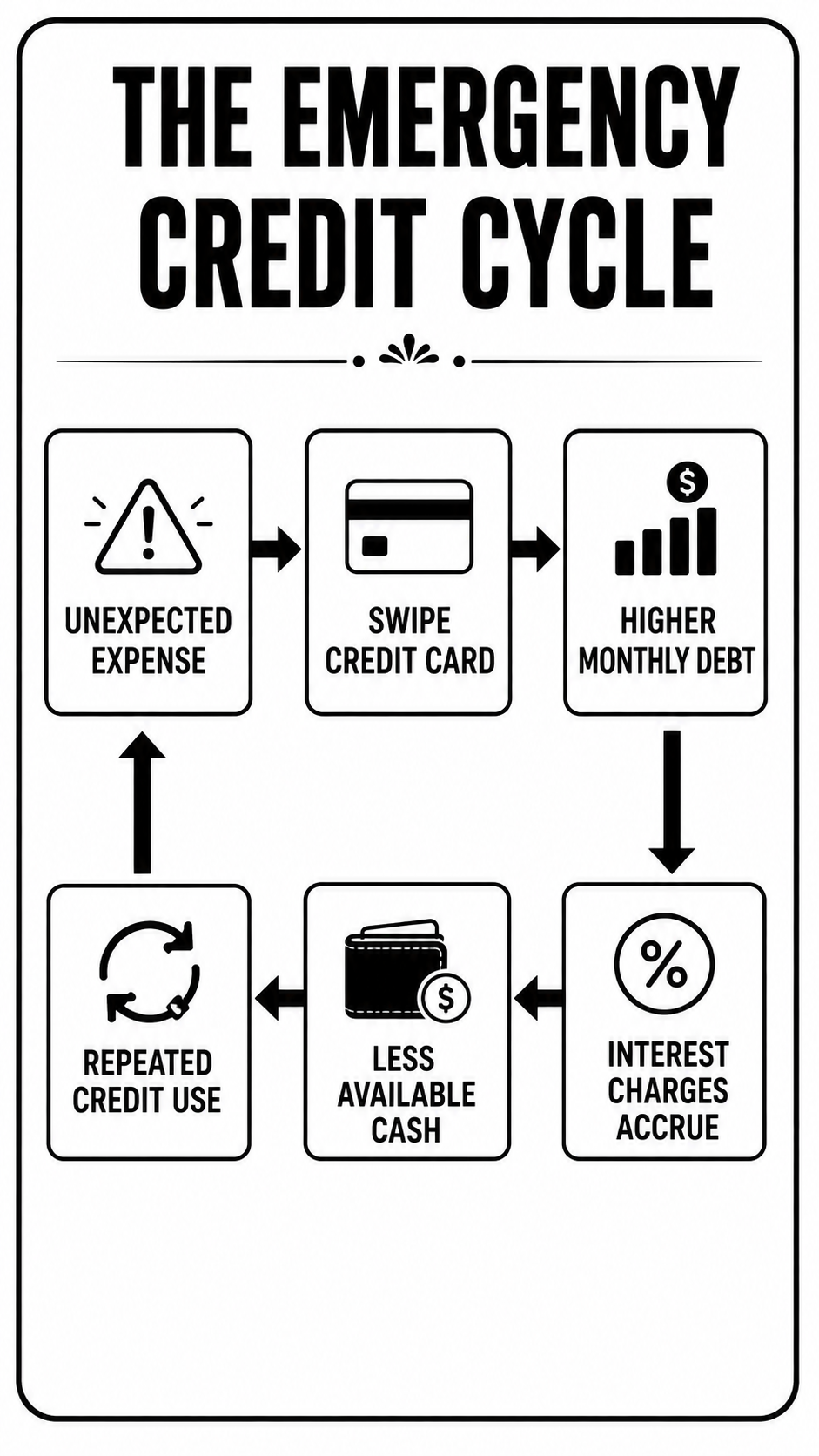
This creates a dangerous financial loop:
- An unexpected expense occurs.
- You swipe a card because cash is tight.
- Your monthly fixed debt payments increase.
- Next month, you have even less cash left over, forcing you to use credit again when the next small surprise happens.
Breaking this cycle is essential if you want to protect your peace and gain true financial independence.
How to Fix It: Building Your Personal Safety Shield
The antidote to borrowing your way through emergencies is building a basic, non-negotiable Emergency Fund. This is not money meant for holiday shopping, weekend outings, or online sales—this is your personal safety shield, built solely to absorb life’s unexpected bumps without disturbing your peace.
- Start with a separate high-yield account: Keep your emergency funds in a dedicated bank account that is separate from your daily spending account. If the money stays in your main checking account, it is far too easy to accidentally spend it on daily groceries or extra treats.
- Focus on a small, achievable target first: Don’t let the thought of saving 3 to 6 months of full living expenses overwhelm you. Aim for a small, realistic milestone first—like saving your first $500 or $1,000.
- Automate small weekly contributions: Consistency beats intensity every single time. Even setting aside $10 or $20 every single week adds up steadily over time. Treat this transfer with the exact same respect you give to your rent or utility bills.
Frequently Asked Question: Should I build an emergency fund if I still have active credit card debt?
Yes, absolutely. Building a small starter emergency fund (even just $500) while paying down debt is crucial. Without that small cushion, the very next unexpected bill will force you back into using your credit card, completely undermining the hard work you are doing to pay off your balances.
2. Putting Everyone Else’s Needs Before Your Own Future
In your 30s and 40s, it is incredibly easy to fall into the role of the quiet provider who carries the financial weight of the whole household. You want the best for your children—the newest school gear, trendy clothes, extra classes, and special celebrations. You might also find yourself stepping in to financially support extended family members or friends whenever they face a tough week.”Learning to set boundaries around your money goes hand-in-hand with healing and building personal peace in every area of your life.”
While giving to those you love comes from a place of deep heart and devotion, doing so at the complete expense of your own long-term financial security is a quiet danger.
The Caregiver’s Financial Trap
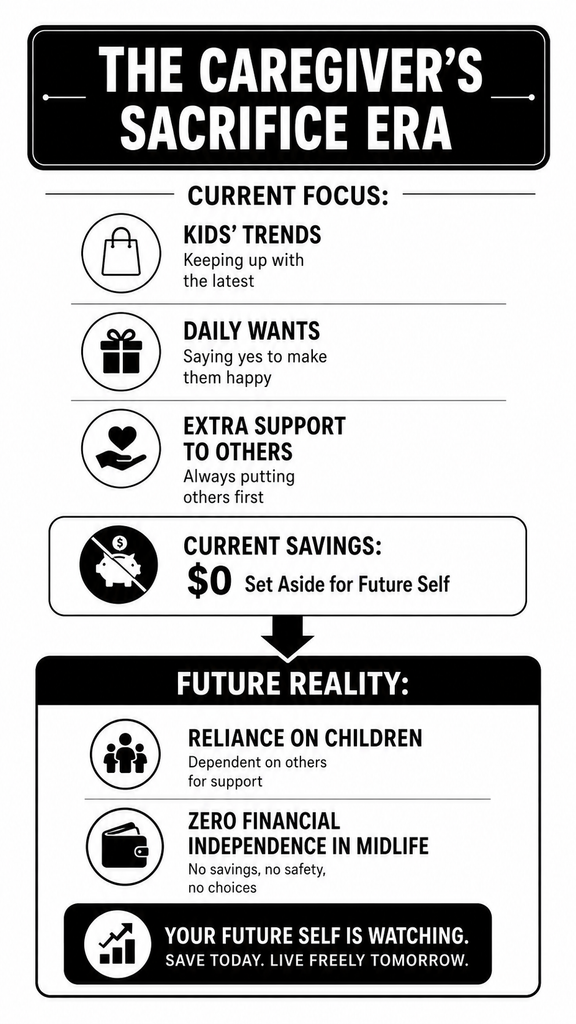
When you allocate 100% of your extra cash toward immediate family demands while setting $0 aside for your future, you are essentially borrowing from your older self to fund today’s temporary comfort.
Many midlife adults tell themselves, “I’ll start saving for my future once the kids are older,” or “I’ll focus on myself next year when things calm down.” But life rarely gets less busy on its own. The years slip by, and before you know it, you are approaching retirement age with no safety net to catch you.
How to Fix It: Pay Yourself
FirstPutting your future first is not selfish; it is an act of responsibility. Securing your own financial footing ensures that you will never become a financial burden to your children down the road.
- Treat your savings like a non-negotiable monthly bill: The moment your income hits your bank account, automatically transfer a set amount into your savings or investment account before paying for extra household wants or leisure.
- Set firm, loving boundaries around giving: It is okay to say a gentle “no” or “not this month” to non-essential financial requests. You can offer emotional support, wisdom, and time without opening your wallet every single time.
- Distinguish between true needs and temporary wants: Ensure your children’s essential needs (food, basic shelter, education) are met, but teach them the value of waiting for secondary wants rather than sacrificing your long-term security to buy them immediately.

Spotting the Signs of Lifestyle Creep
Lifestyle inflation doesn’t usually happen with one massive, reckless purchase. It happens in quiet, daily upgrades that feel completely justified in the moment:
- Upgrading to premium brand groceries or dining out multiple times a week because you had a tiring workday.
- Accumulating multiple monthly streaming and digital subscriptions that you barely watch.
- Buying new wardrobes or home décor items simply because the funds are sitting in your checking account.
Over time, these small upgrades raise your baseline cost of living. Even though you are earning more, you end up living paycheck to paycheck at a higher price tag.
How to Fix It: Practice Intentional Spending
You don’t have to live a life of extreme restriction to avoid lifestyle inflation; you simply need to move forward with intention.
- The 50% Raise Rule: Whenever you receive a raise, bonus, or extra earnings stream, commit to putting at least 50% of that new money directly toward your savings, emergency fund, or debt payoff. You can enjoy the remaining 50% for immediate life upgrades without setting back your progress.
- Audit your recurring expenses monthly: Take 15 minutes at the end of every month to review your bank statement. Cancel subscriptions you haven’t used in the last 30 days and look for minor leaks in your daily spending.
- Pause before major upgrades: Give yourself a mandatory 48-hour waiting period before buying non-essential items or tech upgrades to ensure you are buying out of genuine value rather than impulse.
4. Ignoring Debt Until It Becomes Overwhelming
Carrying high-interest debt into your 30s, 40s, and 50s is like walking up a steep hill with heavy stones in your pockets. Whether it is credit card balances, store accounts, or high-interest personal loans, ignoring the mounting total only makes the climb harder.
The most dangerous financial mistake midlife brings isn’t making a mistake in the first place—it’s pretending the debt doesn’t exist and paying only the minimum balance month after month.
Why Minimum Payments Keep You Trapped
When you pay only the minimum required amount on a credit card or loan:
- The vast majority goes to interest: Almost none of your payment actually reduces the principal amount you owe.
- It drags out over decades: A moderate debt balance can take 15 to 20 years to clear if you only pay the minimums.
- It steals your future momentum: Money spent servicing old debt is money that cannot build your savings or peace of mind.
How to Fix It: Pick a Proven Payoff Strategy
To break free from debt, you need a clear, structured plan that gives you momentum and measurable wins.
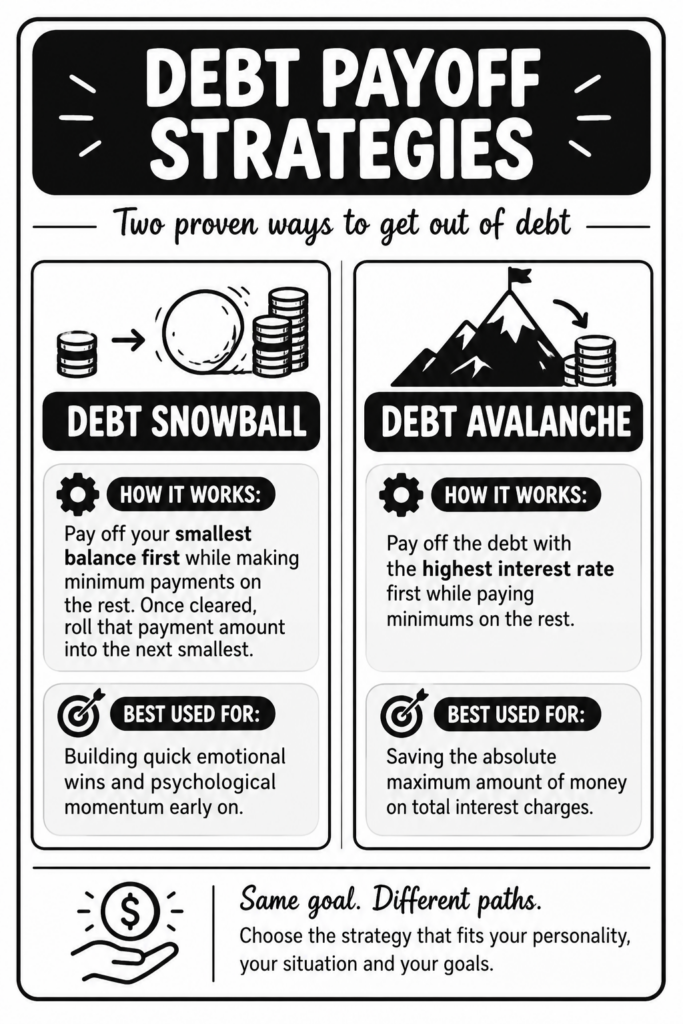
Select the strategy that matches your personality. If you need encouragement, start with the Debt Snowball to clear small accounts fast. If you are driven strictly by the numbers, use the Debt Avalanche.”When creating a pay-down plan, choosing between the debt snowball and debt avalanche methods allows you to pay off balances in a way that matches your personal motivation.”
Frequently Asked Question: Which debt should I clear first if my balances are all similar?
Focus on high-interest credit cards or store accounts first. High-interest debt grows aggressively every single month, making it the most urgent financial fire to put out.
5. Delaying Retirement & Long-Term Planning
The final critical mistake many of us make in our 30s, 40s, and 50s is pushing long-term planning onto the back burner. It is easy to tell yourself “I’m too late to start,” “I don’t earn enough to invest,” or “I’ll focus on retirement next year.”
When daily bills and immediate family demands are loud, long-term savings often feel distant and abstract. But waiting for the “perfect time” to start investing for your future self is a trap—the perfect time rarely arrives on its own.

The Power of Starting Right Where You Are
Many people assume that long-term investing requires huge sums of money. In reality, time and consistency are far more powerful than the amount you start with:
- Compounding Interest: The earlier you put money to work, the more time your returns have to generate their own returns. Even small amounts grow substantially over 10 to 20 years.
- Overcoming the “Too Late” Myth: Starting late is always better than never starting at all. Starting in your 40s with a modest monthly deposit still builds a vital safety cushion for your future.
- Automating Your Investments: Set up a simple recurring monthly transfer into a basic index fund, retirement annuity, or high-yield savings account. Treat it as an automatic transfer that happens quietly in the background.
Final Thoughts: Building Your Peaceful Financial Chapter
Avoiding these common financial mistakes midlife brings isn’t about shaming yourself for past choices—it’s about giving yourself permission to do things differently starting today.
Every small, intentional action you take—whether it’s setting aside your first $20 in an emergency fund, pausing before an impulse buy, or creating a clear debt payoff strategy—is a vote of confidence in your future peace.”Re-evaluating your money habits in midlife is deeply connected to finding your purpose after 35 and taking charge of your next chapter.”
You don’t need to fix every single area of your finances overnight. Pick just one area from this guide to focus on this week, take that gentle step forward, and watch how quiet consistency transforms your financial story.
To learn more about reclaiming your inner peace and personal direction in this chapter of life, be sure to read our article on Finding Your Purpose After 35: Is It Too Late? right here on Vibrant Years!
Leave a Reply